Interior care in the UAE
How to remove stains from car seats without ruining the fabric
Between the school run in Sharjah, weekend beach trips to Fujairah and long commutes on Sheikh Zayed Road, UAE car interiors take a beating. Coffee spills, karak stains, sunscreen, ice cream and desert dust all end up on the upholstery. Here is a straightforward way to lift those marks using proper automotive products, the right brushes, and a bit of patience.
The bento of stain-removal essentials
Rule one
Use dedicated automotive cleaners
Household detergents strip dye and leave rings on upholstery. Automotive upholstery shampoos and leather cleaners are pH-balanced for car interiors, so they preserve colour and lift old stains without bleaching the surrounding fabric.
Tools
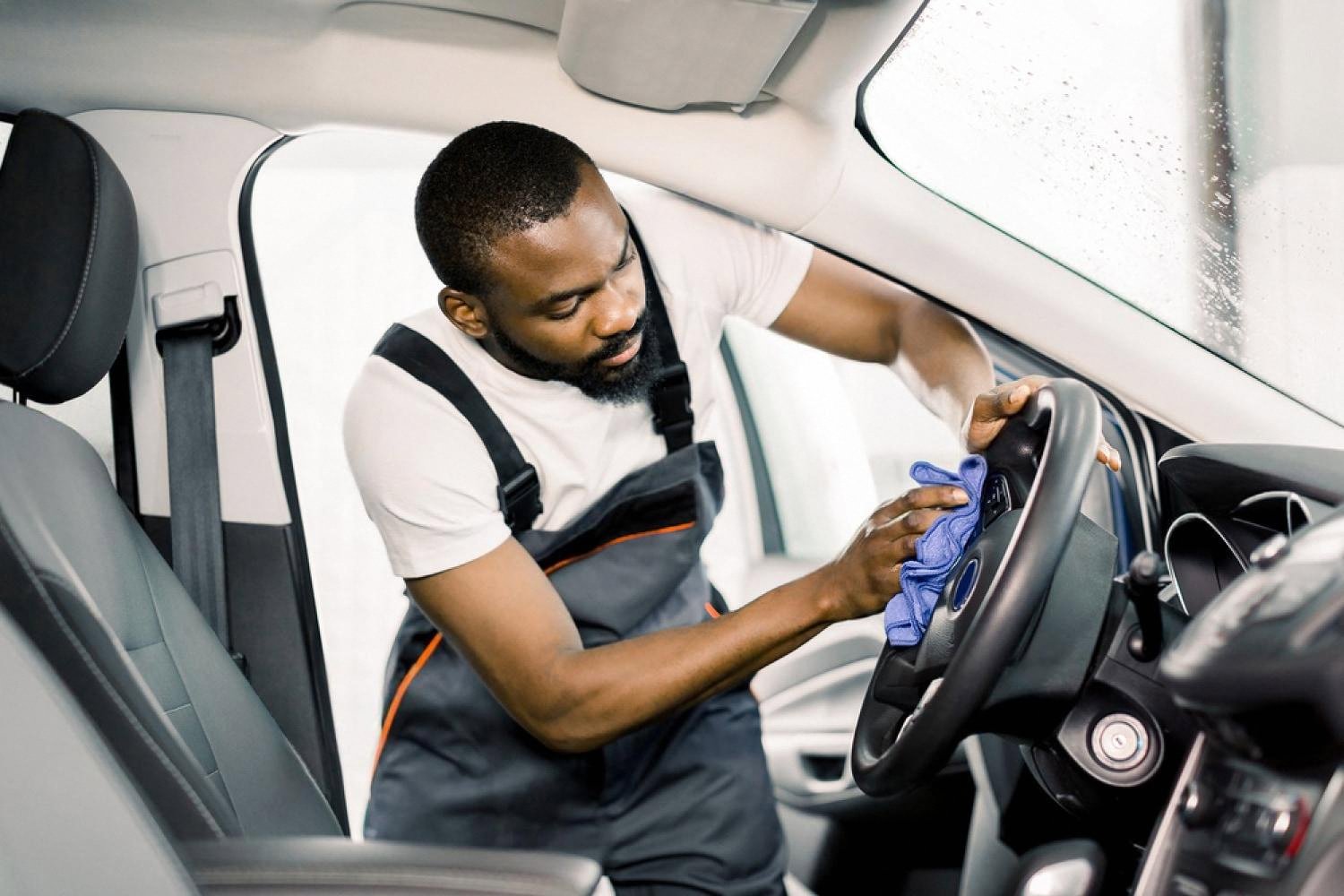
Brushes and microfibre
A soft-bristle detailing brush, a stiffer brush for stubborn spots, and several clean microfibre cloths. Skip kitchen sponges, they smear the stain sideways.
Timing
Respect the dwell time
Every product has a recommended contact time on the label. Too short and the stain stays, too long and you risk a watermark. Set a timer.
Technique
Blot, don’t scrub
Work from the outside of the stain inwards. Blot with a dry microfibre after each pass so you lift the dissolved stain out of the fibres instead of pushing it deeper into the foam padding.
Aftercare
Dry fully before use
Park in the shade with windows cracked open. Sealing a damp seat in a hot cabin invites mildew, especially during Dubai’s humid months.
Step by step
The method that works on most stains
Whether it is spilled karak on a fabric bench or a smear of foundation on leather, the sequence is more or less the same. Skipping steps is what turns a fresh spill into a permanent shadow.
- Vacuum first. Loose sand and crumbs will grind into the fibres the moment you add liquid. A quick pass with a crevice tool prevents that.
- Test the product on a hidden area, under the seat or on the back edge, especially with coloured Alcantara or two-tone leather.
- Apply lightly. Spray onto the cloth or brush, not directly onto the seat, so the cleaner does not soak the padding.
- Agitate gently with the brush in small circles. Let the chemistry do the work.
- Respect the dwell time printed on the bottle, usually one to five minutes.
- Blot and lift with a clean microfibre, then wipe again with a damp cloth to remove residue.
- Dry the seat completely before anyone sits on it again.
Match the product to the mess
Different stains, different chemistry
- Coffee, tea and karaka fabric upholstery shampoo lifts the tannins. Cold water only, hot water sets the stain.
- Oil and greasefrom shawarma or biryani, use an APC (all-purpose cleaner) at the diluted ratio recommended for interiors. Blot with paper towel first to soak up excess oil.
- Ink and pen marksdedicated ink remover for fabric, or isopropyl alcohol on a cotton bud for leather, applied sparingly.
- Blood or protein stainsenzyme-based cleaner and cold water. Never heat.
- Chewing gumharden it with an ice cube in a plastic bag, then lift with a plastic scraper before treating the residue.
- Sunscreen and makeupcommon in UAE cabins, respond well to a citrus-based interior cleaner followed by a leather conditioner.
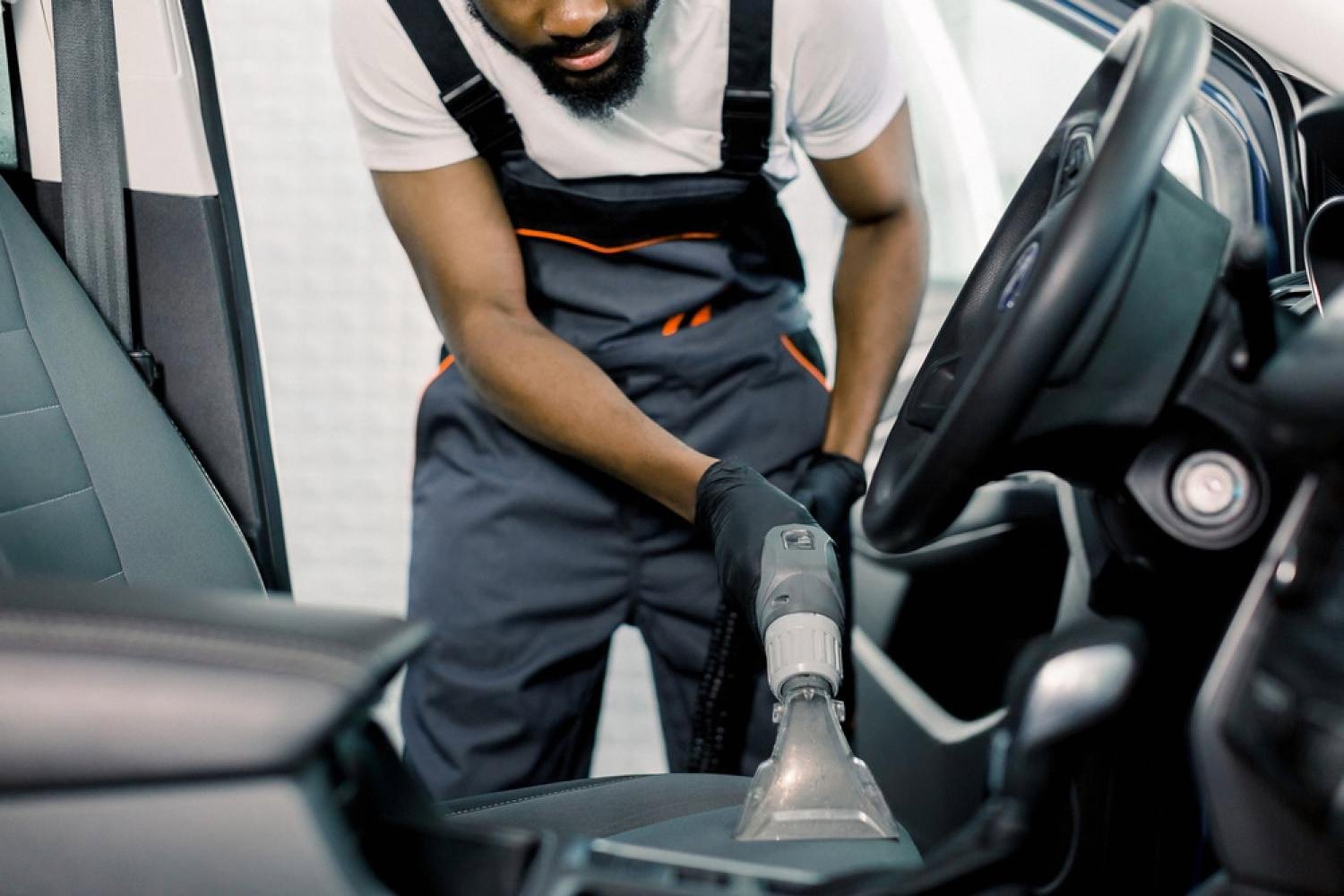
For anything beyond a small localised mark, or for older stains that have been baked in by summer heat, a proper car interior cleaning service will use hot-water extraction and steam to reach the padding underneath the top fabric, which no handheld method really matches.
“The single biggest mistake I see in the workshop is people scrubbing hard with dish soap and a rough sponge. It spreads the stain, damages the weave, and leaves a bright patch that is more visible than the original mark. Slow blotting with the right product beats hard scrubbing every time.”
Fabric versus leather: what changes
Fabric and Alcantara
Fabric absorbs. That is both the challenge and the fix, you need enough moisture to dissolve the stain but not so much that it soaks the foam. Work in thin passes, blot between each one, and finish with a damp-then-dry microfibre wipe to lift any leftover product. Alcantara needs a soft brush only, stiff bristles will polish the nap and leave shiny spots.
Leather and leatherette
Leather sits on top of the surface, so most stains are dealt with by a leather-specific cleaner and a soft brush that works foam into the pores. Follow up with a conditioner, UAE heat dries out leather quickly and cracks appear along the bolsters first. According to standard leather care guidance conditioning every few months extends the life of the hide significantly.
When to stop and call a professional
There are stains worth walking away from. Vomit that has soaked through the seat cover, spilled milk that has been sitting in a closed car for a day in July, transmission fluid, or dye transfer from new jeans on light leather, these need extraction equipment, ozone treatment or colour restoration that home methods cannot deliver. A professional detailer in Dubai, Abu Dhabi or Sharjah usually charges a reasonable flat rate for a full interior clean, and the result on a stubborn stain is worth it compared to a permanent shadow you see every time you drive.
For everything else, patience and the right product win. Keep a small kit in the boot, an upholstery cleaner, a leather wipe, two microfibres and a soft brush, and you can deal with 90 percent of spills in the first five minutes, which is when they are easiest to remove.
Frequently asked questions
Can I use household soap or laundry detergent on car seats?
It is not recommended. Household detergents are formulated for clothing and dishes, not for automotive upholstery. They often leave alkaline residue that attracts dirt, and they can strip colour from dyed fabric or dry out leather. A dedicated automotive upholstery shampoo or leather cleaner is pH-balanced for car interiors and will not fade the material.
How do I remove an old, dried-in stain from a fabric seat?
Older stains need a longer dwell time and often two or three passes. Apply the upholstery cleaner, agitate gently with a soft brush, wait the full time listed on the bottle, then blot and repeat. If the stain is set into the foam beneath the fabric, only hot-water extraction will lift it fully, which is why deep stains often need a professional detailer.
Will cleaning my car seats damage the colour?
Not if you use an automotive-grade product and test it in a hidden spot first. Household bleach-based cleaners and harsh solvents can fade dyed fabric or discolour leather, but proper upholstery shampoos are designed to preserve colour. Always spray onto the cloth rather than directly onto brightly coloured or two-tone seats.
How long should the seats dry before I use the car again?
Give fabric seats at least three to four hours of air-drying with the windows slightly open, or overnight if you cleaned them heavily. In the UAE’s humidity, sealing a damp seat inside a hot cabin can lead to musty smells or mildew. Parking in the shade with a small fan or the AC on low speeds up the process safely.
What is the best way to handle a fresh spill in the car?
Blot immediately with a dry cloth or paper towel, working from the outside of the spill inward. Do not rub. Once you have soaked up as much liquid as possible, apply your upholstery cleaner and follow the standard steps. The first five minutes after a spill are the difference between a quick clean and a permanent stain.
Do I need different products for leather and fabric seats?
Yes. Fabric needs an upholstery shampoo that penetrates the weave, while leather needs a surface cleaner followed by a conditioner. Using a fabric shampoo on leather can dry it out, and using a leather cleaner on cloth will not lift a stain from the fibres. If your car has mixed materials, keep both products in your kit.
Surfer, dreamer, record lover, Vignelli fan and growthhacker. Making at the sweet spot between simplicity and mathematics to create strong, lasting and remarkable design. German award-winning designer raised in Austria & currently living in New York City.